
A useful hob range is built from clear product roles and installation requirements. For European buyers, the first questions are the destination market, the channel’s product brief and the conditions in which the appliances will be installed and supported.
SIELD’s confirmed 14-model review set is grouped into seven standalone induction hobs, four standalone ceramic hobs and three hobs with integrated extraction. These groups help organize a shortlist. They do not establish a universal product mix or demand forecast for Europe.
1. Compare heating technology and installation architecture separately
Induction and ceramic describe the cooking technology in this reference set. Integrated extraction describes a combined cooking-and-extraction format. The three integrated references include both induction and ceramic cooking, so “extractor hob” should not be treated as a third heating technology.
Choose the cooking layout and controls.
Compare two to six zones, narrow and wider bodies, and touch, slider or magnetic-knob interfaces. Flexible cooking areas are listed on selected references.
Compare the heating-area configuration.
The four references cover two to five zones. Selected models list dual-ring, triple-ring or oval heating areas; keep those functions tied to the model.
Review a complete installation system.
Compare the cooking platform together with extraction mode, ducts, filters, cabinet space, service access and electrical documentation.
Organize the purchasing brief around three axes: cooking technology, installation format and operating interface. Then add the relevant dimensions and configuration. This helps explain why two visually similar products may belong to different sourcing discussions.
2. Build the assortment around product roles
Start by describing the role each model would fill in your range. The table below is a selection framework using confirmed references. It provides comparison starting points for a buyer’s own brief.
| Product role | Confirmed references | Selection question |
|---|---|---|
| Narrow two-zone format | PK-M23508 PC-D23229 | Compare the technology, controls, body height and exact opening for the intended installation. |
| Core four-zone format | PK-B47221 PC-D46007 | Start with the same range role, then compare technology, dimensions and electrical configuration. |
| Flexible induction layout | PK-B47221-F2 PK-B472123-F2 | Compare slider and magnetic-knob operation alongside the model-specific cut-outs. |
| Wide multi-zone format | PK-M57228 PC-D596139-MB | Review zone arrangement, power allocation and ring combinations with the proposed configuration. |
| Integrated installation | PXJ-YN77135A-M47274-F1(G3) PXJ-YN45135A-M23574(G3) PXJ-YN77135A-D460124 | Add extraction mode, ducts, filters, service access and complete-appliance documentation to the review. |
A buyer may need a focused four-zone range, a narrow module alongside a main product, or an integrated installation programme. Decide which role is required before adding more model codes. Each additional configuration should have a clear purpose in the range and a defined technical review.
Keep country and channel requirements specific. A single “Europe” entry does not explain the intended electrical connection, installation arrangement, documentation or service responsibilities. Put the first intended destination and the relevant channel constraints into the enquiry.
3. Compare dimensions and cut-outs before assuming a shared installation
The narrow two-zone references show why width alone is insufficient. PK-M23508 and PC-D23229 are both listed at 290 mm wide, but their full product dimensions, catalogue openings and control descriptions still need a model-level comparison.
| Model | Zones | Product dimensions | Catalogue cut-out | Control |
|---|---|---|---|---|
| PK-M23508 | 2 | 290 × 520 × 60 mm | 272 × 496 mm | Touch |
| PC-D23229 | 2 | 290 × 520 × 45 mm | 270 × 490 mm | Slider touch |
The same issue appears in the core four-zone references. PK-B47221 lists 590 × 520 × 56 mm with a 566 × 496 mm cut-out. PC-D46007 lists 590 × 520 × 45 mm with a 560 × 490 mm cut-out. A shared width and depth do not establish installation interchangeability.
Ask for current drawings, tolerances, fixing details, worktop requirements, cabinet clearances and ventilation instructions. When building a coordinated range, decide whether the furniture or worktop opening is a fixed constraint. Keep that decision visible in the model comparison.
4. Keep the power description and operating configuration intact
Use the catalogue power description exactly as supplied for the model. The five-zone induction PK-M57228 lists limited total power of 7200 W. That qualifier belongs in the purchasing comparison; it does not describe every simultaneous zone combination by itself.
The five-zone ceramic PC-D596139-MB lists 9600 W with clarification still required for individual zone and ring operating combinations. Its listed triple-ring and oval areas should be reviewed with the supplier’s configuration information. Adding the individual ring values to create a different total would not resolve the open question.
For the intended destination, provide the available supply and connection requirements and request matching wiring information. Compare the intended operating combinations during the sample review under agreed conditions. The technology label alone is not a basis here for claims about energy use, cooking speed, price or suitability for a particular installation.
5. Treat an extractor hob as a system project
The two 770 mm integrated references are a useful example. PXJ-YN77135A-M47274-F1(G3) uses induction cooking; PXJ-YN77135A-D460124 uses ceramic cooking. Both list a 770 × 520 × 213 mm body. Their catalogue cut-outs are 755 × 492 mm and 750 × 492 mm respectively.
| Model | Zones | Product dimensions | Catalogue cut-out | Catalogue power information |
|---|---|---|---|---|
| PXJ-YN77135A-M47274-F1(G3) | 4 | 770 × 520 × 213 mm | 755 × 492 mm | Catalogue cooktop power: 7200 W. Separately listed fan power: 135 W. Whole-appliance electrical load remains to be confirmed. |
| PXJ-YN77135A-D460124 | 4 | 770 × 520 × 213 mm | 750 × 492 mm | Catalogue cooktop power: 6000 W. Separately listed fan power: 135 W. Whole-appliance electrical load remains to be confirmed. |
The power values in this table are deliberately separated. The listed cooking power and the separately listed fan power do not establish a whole-appliance rated input by simple addition. Request the electrical load and wiring documentation for the selected complete configuration.
Resolve these installation questions before treating the integrated model as part of a range proposal:
- Extraction mode: which ducted or recirculating configuration is proposed for the project?
- Cabinet layout: where will the body, duct routing and connections sit relative to the intended storage or appliances?
- Filters and parts: which items are included, which are configuration-dependent and what information is needed for replacement planning?
- Service access: how will the installed product be inspected, maintained and accessed?
- Technical evidence: what drawings, instructions and model-specific extraction data support the proposal?
If airflow, noise or an extractor energy class is used in the commercial review, request its exact model/configuration, units, operating setting and supporting test or product information. An extractor-function statement must remain tied to its scope; it should not become a blanket claim about the cooking platform.
6. Include service and documentation in the assortment decision
A range plan should say how the selected configurations will be supported. Ask about the relevant controls, knobs, filters and included accessories, the identity of replacement parts, instructions and the information needed for diagnosis. For magnetic-knob references, include the knob configuration and replacement-part questions in the sample discussion.
For integrated products, make the filter and duct configuration visible in the product record. A buyer’s service brief should identify the items to review and the access required in the intended installation. Keep warranty, spare-part and commercial commitments in the agreed project documentation rather than inferring them from a product image.
Request market documentation against the exact model, suffix, configuration and function. Match document identity, scope and version to the proposed product. The general CE/CB information available to this review does not constitute a completed model-by-model verification, and no verified energy-class claim is made in this guide.
7. Turn the proposed mix into a purchasing brief
Prepare one comparison sheet for the proposed range and a configuration record for each shortlisted model. A useful enquiry contains:
- Market and range role: the first destination, sales channel and the job each model must do.
- Model references: full codes, cooking technology, zone layout and control preference.
- Installation constraints: exact cabinet and worktop information, required drawings and any fixed opening.
- Electrical configuration: available supply and connection requirements; complete-appliance review for integrated models.
- Extraction and service: the proposed mode, ducts, filters, access and replacement-part questions where relevant.
- Evidence and sample plan: the documents to match and the appearance, operating and installation checks to perform.
This gives the supplier a basis for configuration recommendations, a quotation scope and a sample plan. It also gives the buyer a way to compare proposals without losing the installation and evidence questions behind a long list of model names.
Model references for your review
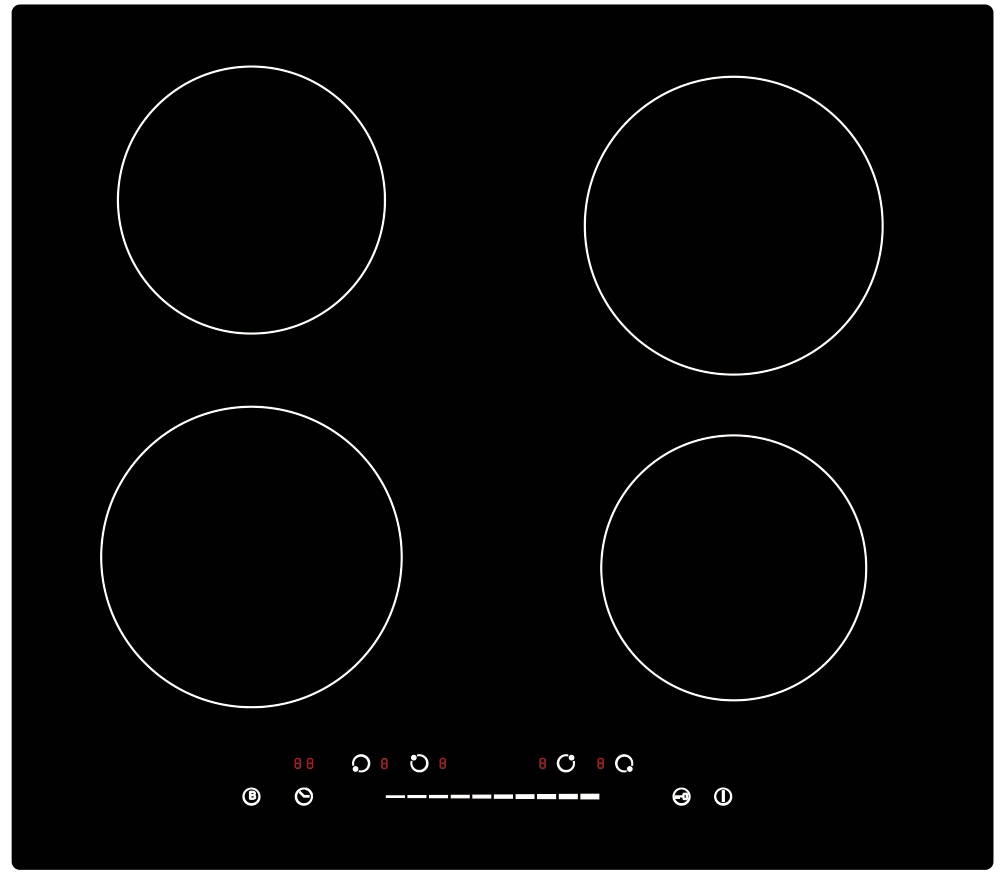
PK-B47221
Four-zone induction cooktop
- Product dimensions
- 590 × 520 × 56 mm
- Catalogue cut-out
- 566 × 496 mm
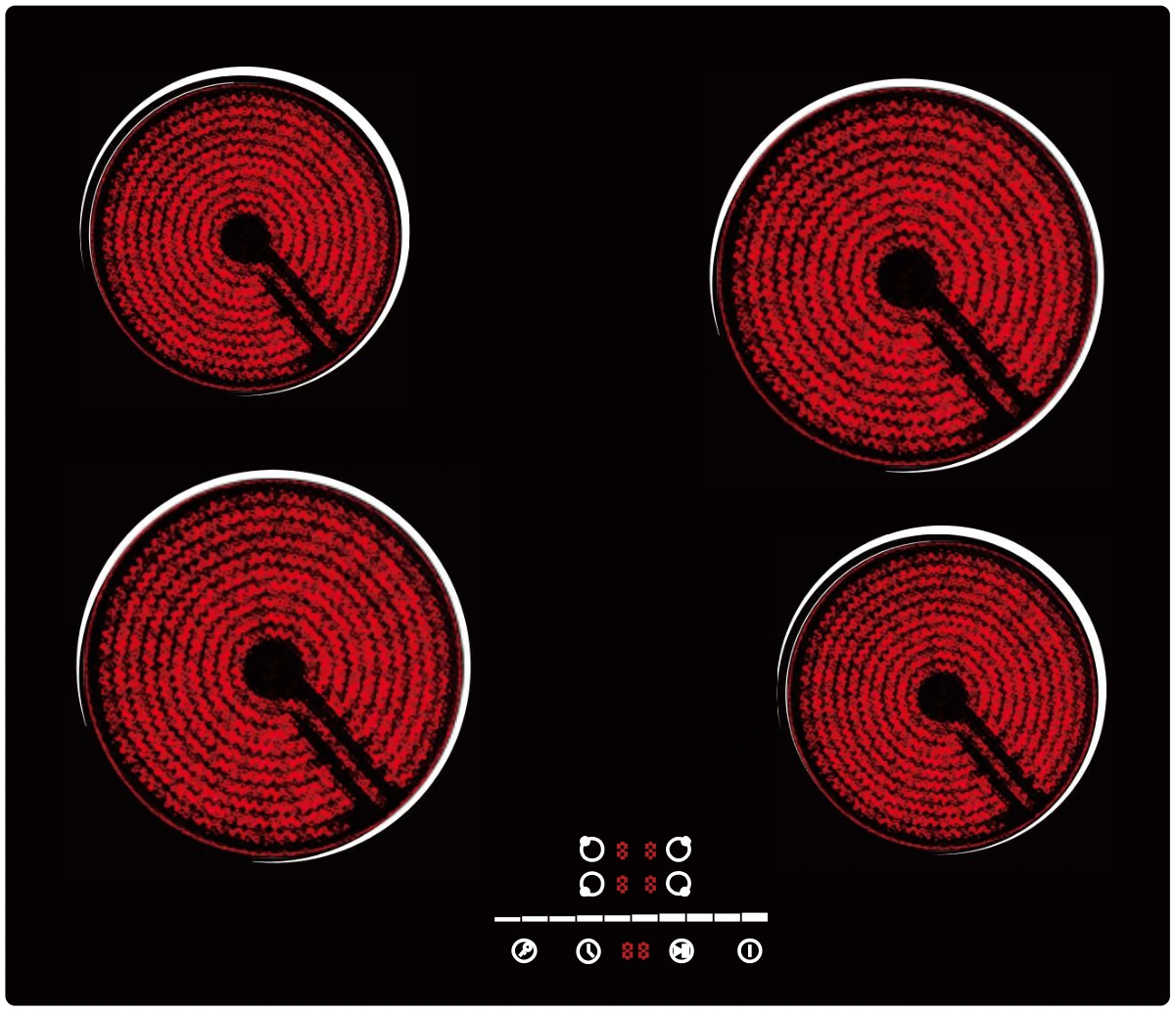
PC-D46007
Four-zone ceramic cooktop
- Product dimensions
- 590 × 520 × 45 mm
- Catalogue cut-out
- 560 × 490 mm
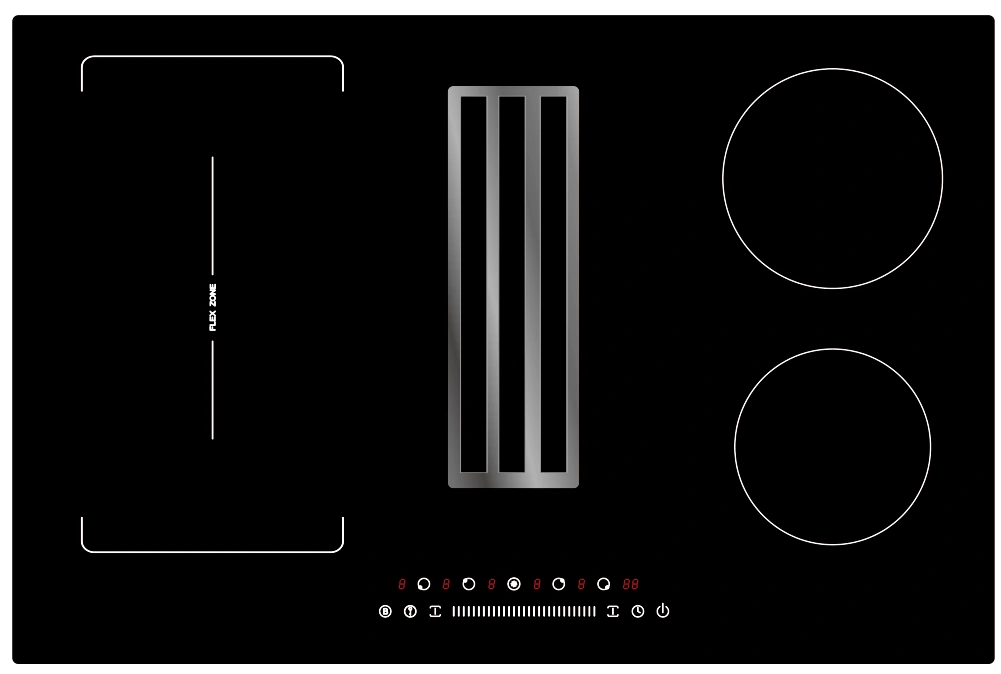
PXJ-YN77135A-M47274-F1(G3)
770 mm four-zone induction cooktop with integrated extractor
- Product dimensions
- 770 × 520 × 213 mm
- Catalogue cut-out
- 755 × 492 mm